
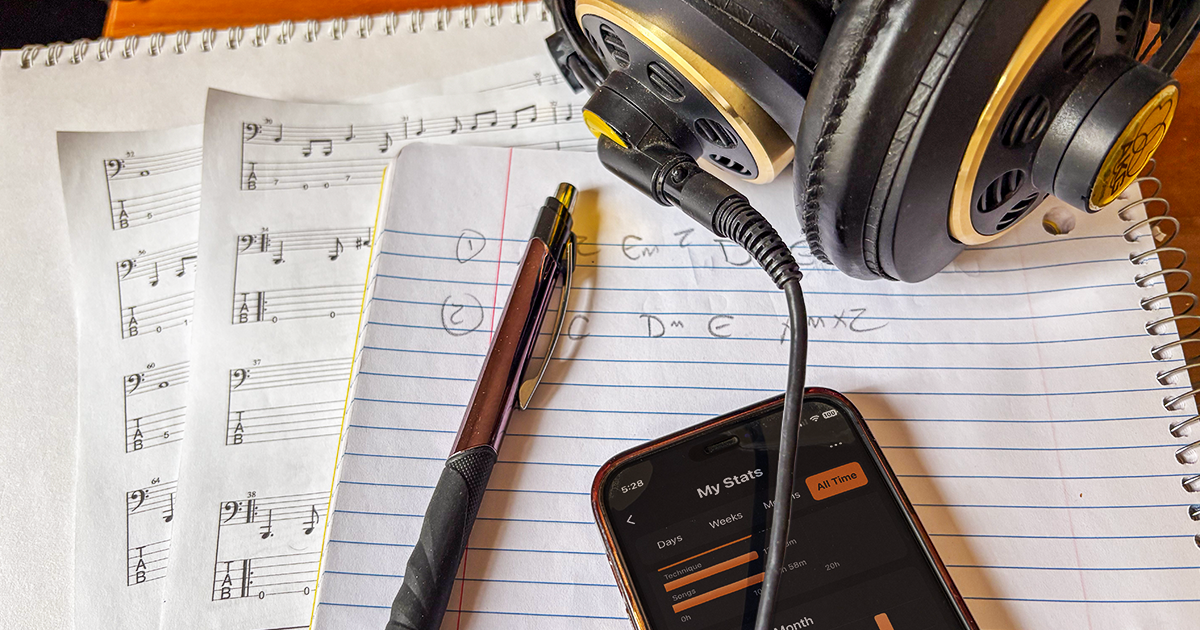
You practised yesterday. But...what? For how long? Was it any good?
If you can't answer those questions, you aren't having a 'senior moment'. Most musicians have no record of their practice beyond a vague sense that they played recently. And that vagueness isn't helpful.
The memory problem
Human memory is unreliable, especially for routine activities. After a week, you won't remember whether you practised for ten minutes or thirty. After a month, you will not remember which days you skipped. After three months, forget about it.
This matters because improvement is gradual. Day to day, the changes may be invisible. You sound roughly the same on Tuesday as you did on Monday. The improvement becomes noticeable over weeks and months, exactly where your memory is the weakest.
Without a record, you are relying on feel. And feel is unreliable. On a good day, you congratulate yourself on practising consistently. On a bad day, you convince yourself you suck. Likely, neither one is accurate.
A practice log replaces feels with data.
What to track
You don't need a complicated system:
Duration. How long was the session? This is the simplest metric and the foundation of everything else. Over time, total practice time is the single strongest predictor of improvement.
What you worked on. Scales, rhythm, a song, improvisation, a technique. Categorizing your sessions reveals patterns you would otherwise miss. You might find you spend eighty percent of your time playing songs and almost none on the fundamentals that makes those songs easier to play.
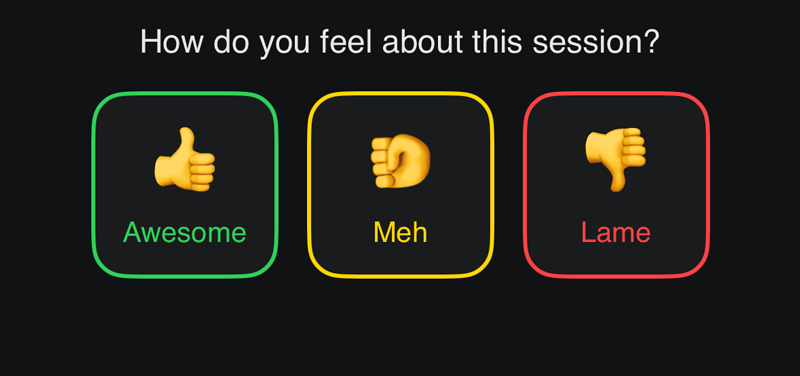
How it felt. A simple rating after each session — did it feel awesome, meh, or lame? Accumulated over dozens of sessions, these ratings can reveal surprising correlations. You might find that your best-rated sessions happen in the morning. Or that sessions focused on rhythm consistently feel better than sessions focused on theory. That information helps you design a practice routine that works with your tendencies instead of against them.
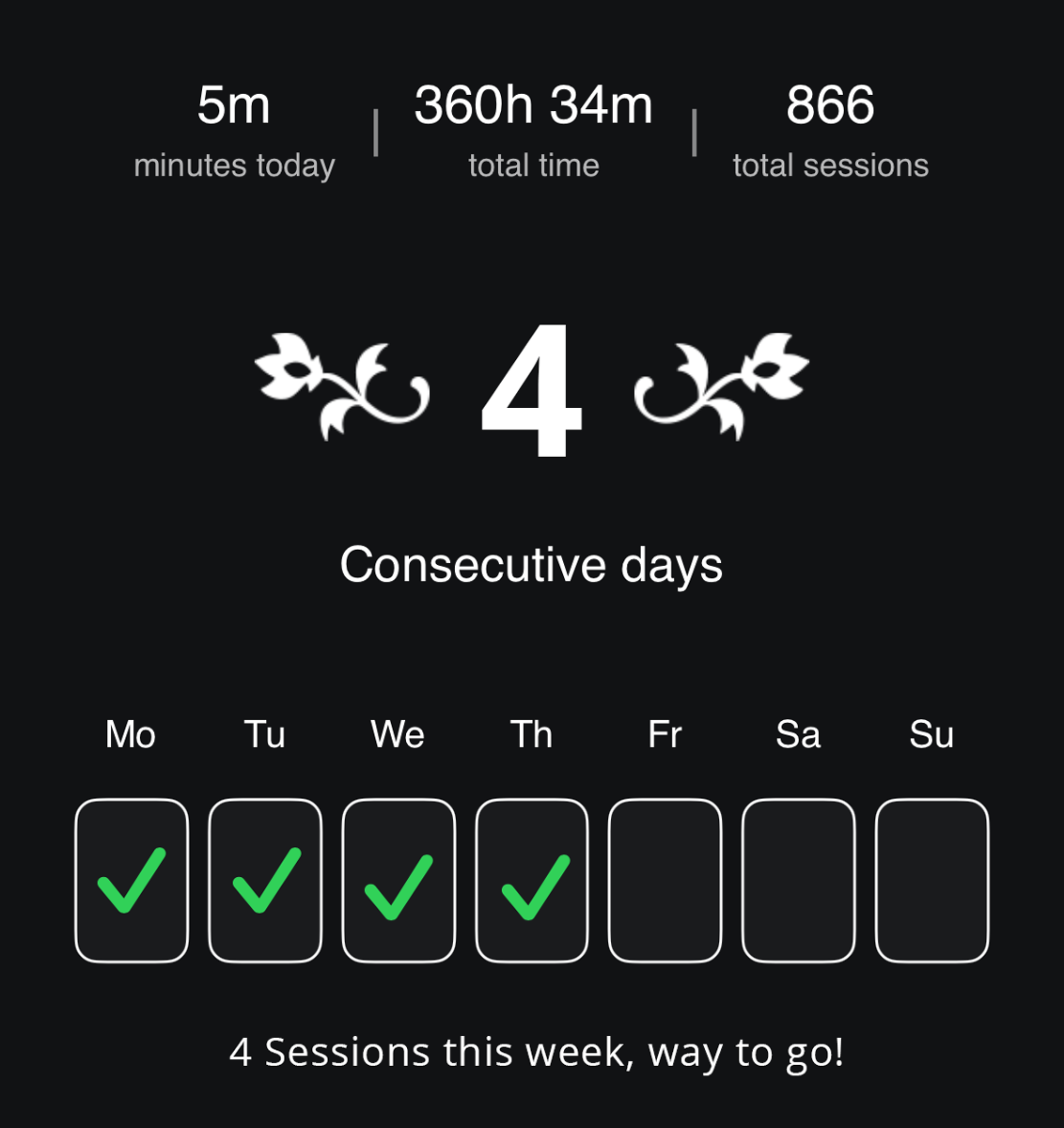
Consistency. The streak. How many consecutive days have you practised? This is the metric that changes behaviour. When you have a streak of seven days, you don't want to break it. At fourteen days, the habit starts to feel automatic. At thirty, practice is just what you do.
The streak effect
Streaks work because they shift the decision from “should I practise today?” to “do I want to break my streak?” The first question requires motivation, which fluctuates. The second question is about losing, which is one of the strongest forces in human psychology. Losing a fourteen-day streak feels worse than gaining one more day feels good. Your brain knows this, and it will help push you to pick up the instrument on days when you don't feel like it.
This is not a trick. It is how habits form. Cue, routine, reward, and above all, consistency.
The key is to keep the threshold low. A streak shouldn't not require a ninety-minute session to maintain. Five minutes counts. Ten minutes counts. Mix it up. If you feel like an uninspired lump, do a shorter session. On days when you have energy and time, you will naturally practise longer.
What the data tells you
After a few weeks of tracking, patterns emerge that are invisible day to day.
You might see that your total practice time is climbing steadily. Or you might see that you skipped three days in the middle of the month and notice that those gaps align with stressful days, which tells you something about when to schedule practice.
You might discover that your highest-rated sessions are the ones where you spent time on scales before moving to songs, or you might find that sessions over thirty minutes tend to have lower ratings than sessions under twenty.
Seeing your own data changes your behaviour in ways that willpower alone can't.
Start with what you have
You don't need to overhaul your practice routine, just start logging what you are already doing.
Tomorrow, when you pick up your instrument, set the timer. Choose what you are working on. Play. When you finish, rate the session. That is it!
Do this every day for two weeks. You will know more about your practice habits than you have ever known, and you will have a killer streak worth protecting.
Now, quit reading and start logging!